Posts

Showing posts with the label Pakistan

WHY SUCH A HOOPLA OVER A POORLY WRITTEN ARTICLE IN ‘THE ECONOMIST’?

Image
Mukesh Devrari    On January 23, 2020 The Economist ran a story titled ‘Narendra Modi stokes division in the world’s biggest democracy’. First, it must be remembered that ‘The Economist’ is a British magazine. It has no role to play in the making of India. There is no reason for Indians to be overjoyed when it praises their country, neither they should feel despair at criticism.  It is basically a white man’s take on world affairs. Secondly, it is also important to note that the whole world watches India with keen interest. Almost 20 per cent of the world’s population live in South Asia. The world has a stake in the economic progress of the region if India will be focusing more on the issues other than the economy, the world community is likely to question the country.  Unfortunately, over the last six years, India is in news for wrong reasons. IMF has forecasted that the growth rate this year likely to remain less than five per cent. Just a decade ear...
CONTESTING PERSPECTIVES ON JINNAH AFTER HIS DEATH?

Image
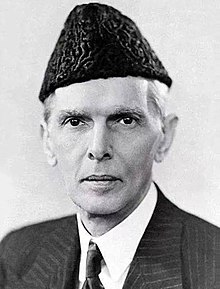
Mukesh Devrari One can find in Jinnah what one is looking for. If you are looking for the liberal westernized secular politician, you can definitely find one before Jinnah devoted himself to the communal cause of Muslim league or after the creation of Pakistan in his last speech where he sounded more like Congress leader. Cigar, whiskey, pork and aloofness to religion were standard markers of his life.    Mr Jinnah was born in Karachi on December 25, 1876. He was the eldest son of Jinnah Poonja, a well to do Hindu merchant. The son later adopted his father's first name as his own last name. After attending a school in Karachi, he went to England at the age of 16 to study law at Lincoln's Inn. He returned to India four years later in 1896 as a full-fledged barrister. He had learned to speak English perfectly – at one time he even toured England as a Shakespearean actor – and for the rest of his life he was more at home in English than in Gujarati, his mother to...

DID PRIME MINISTER NARENDRA MODI BETRAY THE NATION?

Image
Mukesh Devrari Prime Minister Narendra Modi has opened a Pandora’s box by asking Donald Trump to mediate in Jammu & Kashmir. Asking for mediation by United States is the first step of losing Kashmir. Prime Minister Nehru did the same blunder by asking for the United Nations intervention in 1948. All right-wing politicians still abuse Nehru as he acquired only half of the Kashmir and ran to UN for intervention, rather than repelling all Pakistani invaders from entire Kashmir. Pakistan still controls one-third of the Kashmir. Why Modi has not been briefed properly by seasoned bureaucrats around him? Why did he ask for Trump’s mediation? What did he intend to achieve through US mediation in Kashmir? What are the implications of Modi’s tactical blunder? Why is he keen to internationalize Kashmir issue further? Is he such a novice on foreign policy issues? Did he think he can make a joker out of Pakistan like he did to his main political opponent Rahul Gandhi? Has he...

BOOK REVIEW: REMARKABLE JOURNEY TO NO MAN’S LAND

Image
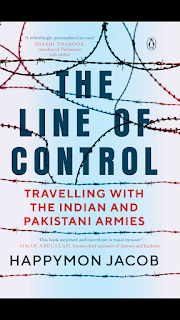
Mukesh Devrari Happymon Jacob’s new book ‘The line of control: Travelling with Indian and Pakistani Armies’ is an interesting story of his personal journey as a researcher. Although his another book titled ‘Line on Fire: Ceasefire Violations and India-Pakistan Escalation Dynamics’ has become a talk of the town because of his sensational revelation that 9/11 derailed Indian Army’s plan to capture Pakistani posts along LoC to end infiltration for once and all.   His less controversial book ‘The line of control: Travelling with Indian and Pakistani Armies’ tells the story of a man and his personal journey to study two rivals of South Asia and their conflicts. In this case, Professor Happymon Jacob has come a long way since the day he was advised by Hamid Ansari how to be a good repertoire. He has successfully entered the club of individuals who are out of power but continue to play a role in influencing opinion through negotiations and discussions with their counterparts...

WHY CAN’T AMU REMOVE THE PORTRAIT OF JINNAH?

Image
Mukesh Devrari Jinnah is a controversial man. He is controversial because he used controversial ideas to advance controversial and communal interests of the Muslim community in India at the cost of multiculturalism and secular fabric of the nation. It is madness to claim that people of two religions cannot stay together in a British style parliamentary democracy. Jinnah claimed that Muslim minority consisting of tens of million did not trust the intent of leadership of religious majority.  Keeping religion at the centre of identity above everything else for political goals proved dangerous of South Asia. Not only Indians lost a strategic part of their country to Islamists of northern India, but it also paved the seeds of trouble in the future.  Many left-leaning scholars in Pakistan today feel that even if the creation of Pakistan did not have politically correct reasons, it still has a rightful claim to exist as a normal nation without sticking to any ideology. I...

SHOULD INDIA OPT FOR BELT AND ROAD INITIATIVE?

Image
Sino-India relationship is considered as one of the most important relationships of the 21 st century in Asia. It has the potential to bring mutual prosperity and progress to one-third of humanity on the planet. Over the last seven decades, India and China have clashed over many issues, yet both the nations have succeeded in maintaining peace and tranquillity on the line of actual control (LAC), which is a de facto international borders. Mukesh Devrari, Assistant Professor, School of Media and Communication interviewed Professor Ravindra Sharma, Department of Chinese Languages, who has authored two books on China. He is currently working on his fourth book mapping Sino India relations in Xi-Modi Era. What are the implications of BRI? Was it a a correct decision on the part of India to oppose ‘BRI' and in particular CPEC. How do you see these emerging dynamics? It was a very unwise decision on the part of India to outrightly reject the participation of Belt and Road In...

PAKISTAN IS STILL A NATION IN THE MAKING

Image
Pakistani Flag. Source - Wikipedia Mukesh Devrari Pakistan has been carved out in 1947. It was an artificial nation. Islam was used as a tool to create a nation by encouraging separatism in Muslim majority areas. Violence was used as a tool to pressurize British government and Congress party. Finally, they gave in to the demands of Muslim separatists who claimed that Hindus and Muslims cannot stay together in one nation. Pakistan has seven provinces – Baluchistan, Khyber Pakhtunkhwa, Punjab, Sindh, Federally Administered Tribal Areas, Occupied Kashmir and Gilgit–Baltistan. Out of those 7 provinces, four are completely under the control of Punjabi Muslims.  Many Indian Muslims believe that Pakistan was created and imagined as a home for all South Asian Muslims. Only after partition, they realized that it was not the case. It provided a home to the Muslim elite who were not satisfied with the democratic turn India was about to take after the end of the British rule. ...

DOES INDIA NEEDS DICTATORSHIP FOR PROGRESS?

Image
Dust and smoke billows out from a residential house which was blown up during a gunfight between militants and Indian soldiers in Durbagh village of Chadoora, 15 km from Srinagar, the summer capital of Indian Kashmir on March 28, 2017. One militant was killed and an Indian soldier injured during a 10-hour-long gunfight. Three civilians were also killed and at least 15 injured during clashes near the gunfight site. Photo courtesy Agencies SOURCE - NAM NEWS NETWORK Mukesh Devrari First, Young generation of Indians are least bothered about freedom and liberty ensured in this country to each and every citizen. They feel too much of freedom is hampering decision making and implementation of policies. Students, mostly upper caste, who have never seen any hardships in life, have been coaxed to believe that democracy in India is a barrier in our rapid progress and economic development. These emerging militant nationalists are not ready to accept that almost all rich nations o...

CURRENT KASHMIR CRISIS IS NOT A PAKISTANI CREATION

Image
 Photo courtesy Mukhtar Khan, NAMNEWSNETWORK Mukesh Devrari Pakistani newspapers are obsessed with India these days. They are giving too much importance to the speeches of their leaders and statements of their bureaucrats. Reading them is like listening to someone totally inebriated and talking incessantly without caring what he or she means. Former ambassadors and public intellectuals in Pakistan through their writings are encouraging their government to raise Kashmir issue. They think it will encourage Kashmiri Muslims to protest more vehemently against India.  If their version is to be believed, Pakistan has successfully cornered India on Kashmir in United Nations and rest of the world and assimilation of Kashmir in Pakistan is days away. In India, this perspective appears extremely ambitious and unrealistic.  India lived peacefully for twenty years after 1971 war. During the 1990s Pakistan started creating troubles for India again by encouraging ar...